
Navigating the healthcare system can be a real bugbear, especially for members of the disability community. We’re with you on this, it’s a path we’ve walked as well and discovered along the way that telehealth services are a fair dinkum lifesaver.
This yarn is set to guide you through how these services can make accessing health care less of a headache and more manageable for folks with disabilities. Stick around to learn a bit more about it!
Key Takeaways
- Telehealth services make healthcare easier to access for people with disabilities, allowing them to connect with doctors and specialists without the need to travel.
- It offers solutions to common barriers such as physical accessibility issues, communication difficulties, and technology limitations by providing virtual consultations from home.
- The implementation of telehealth requires platforms to be user-friendly and compatible with various assistive devices, like screen readers and voice recognition software, for effective communication.
- For successful telehealth experiences, it’s important for policies that support privacy, security, accessibility standards, and funding challenges to be addressed thoroughly.
- By embracing new technologies and ensuring they are accessible, we can guarantee full participation in telehealth services for individuals with disabilities now and into the future.

Barriers and Challenges for Persons with Disabilities in Accessing Healthcare
Accessing healthcare can be challenging for people with disabilities due to a lack of accessibility and communication barriers. Additionally, technology limitations further compound these difficulties.
Lack of accessibility
Many people with disabilities face significant hurdles in getting to their healthcare appointments. Physical barriers at medical facilities can make it difficult for us to access the services we need.
This includes issues like lack of ramps for wheelchair users or inaccessible transport options. We often struggle with buildings that weren’t designed with our needs in mind, making it hard to even get through the door.
Communication barriers come up next, presenting another layer of difficulty. For instance, not having sign language interpreters available during appointments limits our ability to communicate effectively with healthcare providers.
This leads us into exploring how Telehealth can break down these communication walls, connecting us directly to specialists who understand and cater to our specific needs without leaving home.
Communication barriers
Navigating healthcare as a person with a disability may come with its own challenges, from lack of accessibility to communication barriers. Communicating effectively with healthcare providers is crucial for understanding diagnoses, treatment options, and managing health needs.
Many disabled people experience difficulties in expressing their health concerns due to speech or language impairments. Healthcare professionals may not be proficient in using alternative forms of communication, such as sign language or augmentative and alternative communication (AAC) devices.
This can create significant barriers to receiving quality care and support.
Technology limitations
Technology limitations can make it difficult for some disabled people and senior citizens to access telehealth services. Some individuals may struggle with using the necessary devices or internet connection due to physical impairments.
Additionally, not all telehealth platforms are designed with accessibility features that cater to the specific needs of disabled individuals, creating barriers to navigating and utilising these technologies effectively.
The lack of compatibility with assistive devices further adds to the challenges faced by disabled individuals when accessing telehealth services. Problems such as screen reader compatibility, voice recognition software support, and keyboard navigation can hinder their ability to fully engage in virtual healthcare consultations.
Benefits of Telehealth for People with Disabilities
Telehealth offers increased convenience and accessibility for people with disabilities, allowing them to access specialised care from the comfort of their homes. It also reduces exposure to illnesses that might be encountered in traditional in-person healthcare settings.
Increased convenience and accessibility
Telehealth services offer increased convenience and accessibility for disabled people and senior citizens. Accessing in-person healthcare can be challenging due to mobility issues, transportation barriers, or long waiting times.
Telehealth allows individuals to access healthcare remotely from the comfort of their own homes. NDIS support and disability access enhancements have made it easier for individuals to connect with speech pathology, occupational therapy, behaviour support, and other specialist teams through telehealth technology.
This means that there is no need to travel long distances for appointments, saving time and energy.
The digital healthcare realm has unlocked the secrets of remote patient care by providing tailored accessibility services. Through convenient telecare community offerings, individuals can now benefit from telemedicine consultations without leaving their homes.
Improved access to specialised care
Telehealth services offer us better access to speciality care. We receive quick consultations without needing to travel a long distance. NDIS services also assist in arranging specialist appointments through telehealth offerings.
Health literacy enhancement by healthcare providers further supports our understanding of the diagnosis and treatment plans, making specialised care more accessible for us.
By embracing remote healthcare options, we can avoid exposure to illness and reduce the need for behaviour support or disability support services during in-person healthcare visits.
Accessible technology allows us to have tailored telehealth consultations with specialists who are familiar with our needs and can provide detailed assistance as we navigate the complexities of our health requirements.
The world of telehealth not only opens possibilities but also underpins accessibility and robust engagement with specialised care.
Considering these benefits, it’s imperative that we grasp how we can fully participate in this ever-evolving realm of health accessibility, ensuring full participation and access for all individuals seeking more than just standard care experiences.
Reduced exposure to illnesses
Telehealth reduces the risk of exposure to illnesses, allowing us to access healthcare from the comfort of our homes. By avoiding crowded waiting rooms and in-person interactions, we can lower the chances of catching common infections.
This is especially important for people with disabilities or seniors who may have weaker immune systems. Telehealth technology lets us seek medical advice without worrying about potential exposure to contagious diseases, ensuring that we can stay healthy and safe.
With telehealth services, disabled individuals and seniors can receive necessary care and support while minimising their risk of getting sick. This means fewer trips outside and reduced contact with other potentially ill individuals, giving us peace of mind when it comes to prioritising our health.
Considerations for Implementing Telehealth for People with Disabilities
When implementing telehealth for people with disabilities, it is essential to consider design, implementation, and policy considerations. To learn more about the specific requirements and successful strategies in providing accessible care through telehealth services, keep reading.
Design considerations
When selecting a telehealth platform, consider its ease of use and accessibility features. Ensure that the interface is user-friendly and compatible with assistive devices such as screen readers or voice-activated controls. Additionally, look for platforms that offer customisable settings to accommodate different needs and preferences.
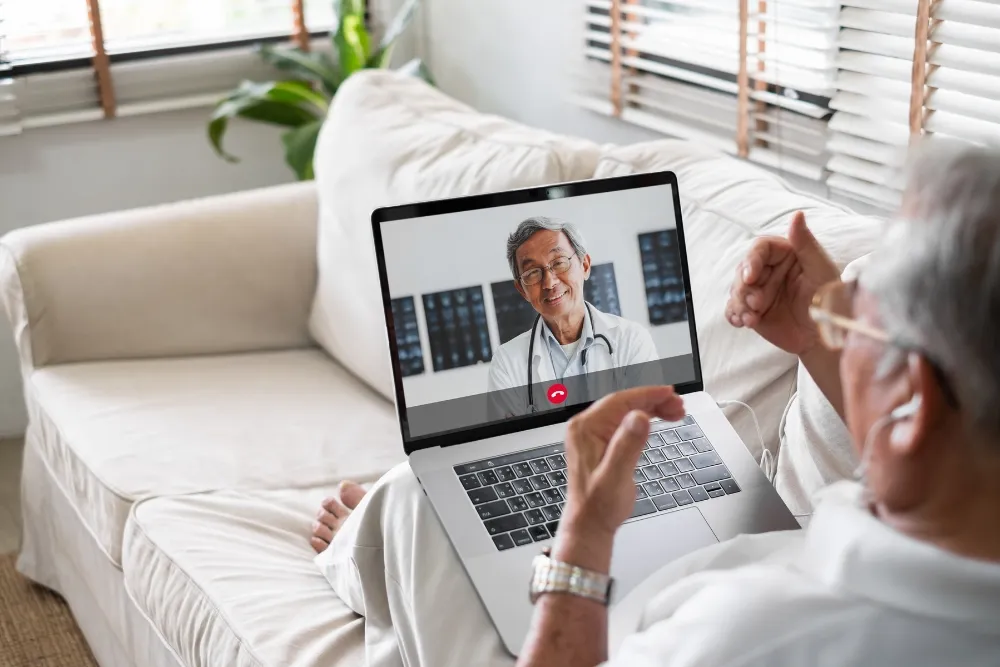
Consider the visual and auditory design of the telehealth platform. Look for options that have high contrast, adjustable font sizes, and support for sign language interpretation. Find platforms that prioritise clear audio and video quality, enabling effective communication during virtual appointments.
Evaluate the platform’s compatibility with various input methods. Look for telehealth solutions that support touchscreens, keyboard navigation, and alternative input devices to ensure that individuals with diverse motor skills can effectively interact with the system.
Assess the security and privacy measures of the telehealth platform. Prioritise solutions that adhere to stringent data protection standards and offer encrypted communications to safeguard personal health information. Look for platforms with robust authentication processes to prevent unauthorised access.
Explore telehealth platforms that provide multi-language support to cater to individuals from diverse linguistic backgrounds. Consider solutions that offer real-time translation services or multilingual interfaces to facilitate effective communication between healthcare providers and patients who speak different languages.
Look for telehealth platforms that offer comprehensive training resources and technical support to assist individuals in using the system effectively. Prioritise solutions that provide accessible training materials and responsive customer support channels tailored towards addressing the needs of disabled individuals.
Evaluate the interoperability of the telehealth platform with other healthcare systems and devices. Select solutions that seamlessly integrate with electronic health records, medical devices, and assistive technologies, ensuring a cohesive approach to healthcare management for people with disabilities.
Assess the scalability of the telehealth platform to accommodate future advancements in assistive technologies and evolving accessibility standards. Choose solutions designed with flexibility in mind, capable of adapting to emerging technological developments without compromising accessibility for disabled individuals.
Implementation considerations
When implementing telehealth for people with disabilities, we need to consider:
- Ensuring that the telehealth platform is compatible with assistive technologies such as screen readers and voice recognition software, making it accessible for all users.
- Providing comprehensive training and support to both healthcare providers and individuals using telehealth services, ensuring they are comfortable and proficient in utilising the technology.
- Guaranteed privacy and security measures are in place to protect sensitive health information shared during telehealth consultations.
- Adapting the user interface of the telehealth platform to cater to various communication styles, including alternative formats for written content and sign language interpretation options.
- Collaborating with disability communities to gather feedback and continuously improve the accessibility and usability of telehealth services.
Policy considerations
When considering policy considerations for implementing telehealth for disability communities, we must ensure that legal and ethical frameworks are in place to protect the rights and privacy of individuals. Here’s a detailed list to guide our understanding:
- Ensuring compliance with disability discrimination laws to guarantee equal access to telehealth services.
- Developing policies that address consent and decision-making capacity for individuals with disabilities in telehealth consultations.
- Creating reimbursement policies that cover the cost of assistive technology or support personnel necessary for effective telehealth visits.
- Establishing protocols for addressing digital security and protecting personal health information during telehealth interactions.
- Implementing guidelines for accommodating diverse communication needs, such as sign language interpretation or alternative communication methods.
- Addressing issues related to insurance coverage and ensuring that telehealth services are recognised and reimbursed appropriately.
These policy considerations aim to foster an inclusive and supportive environment for people with disabilities when accessing telehealth services.
The Future of Telehealth for Disability Communities
The future of telehealth for disability communities includes addressing funding and conflicts of interest, embracing new technology and making it accessible, as well as ensuring full participation and access for all individuals.
Addressing the funding challenges will enable disabled individuals to benefit from improved care through telehealth services, while embracing new technology ensures that the tools used are accessible to everyone.
Ensuring full participation and access means that no one is left behind in reaping the benefits of telehealth services.
Addressing funding and conflicts of interest
To ensure fair access to telehealth services for disability communities, we need to secure adequate funding and transparency in addressing conflicts of interest. This means advocating for sufficient financial support from governments and healthcare organisations to develop and sustain telehealth programmes that cater specifically to the needs of people with disabilities.
Additionally, it is crucial to establish clear guidelines and policies that address potential conflicts of interest among healthcare providers, ensuring that decisions are made in the best interests of patients without any external influences.
By addressing these fundamental aspects, we can work towards creating an inclusive telehealth environment that prioritises accessibility and integrity while delivering much-needed care and support to disabled individuals.
Embracing new technology and making it accessible
As technology continues to evolve, we are committed to ensuring that all individuals have access to the latest advancements. We aim to make new technology easily accessible and user-friendly for everyone within our disability communities.
Our goal is to ensure that no one is left behind when it comes to harnessing the benefits of telehealth services. We strive to create inclusive solutions that cater specifically to the diverse needs of disabled individuals and senior citizens, making sure they can effortlessly navigate and utilise these technologies for their healthcare needs.
Looking towards the future, our focus remains on enhancing accessibility and participation in telehealth for all members of our community, especially those with disabilities and senior citizens.
Ensuring full participation and access for all individuals
To ensure that everyone can access and fully participate in telehealth services, we’re committed to providing accessible platforms for all disabilities. Our aim is to make sure that our telehealth services are compatible with screen readers and other assistive technologies, so you can easily navigate appointments and communicate effectively with healthcare providers.
We also prioritise clear communication and provide support for those who may need assistance in using the technology. By making telehealth inclusive for all individuals, we strive to empower disabled people and senior citizens to take control of their healthcare journey.
When it comes to ensuring full participation and access for all individuals, we continuously seek feedback from our community to improve our services. Your input helps us tailor our approach to meet your specific needs, creating an environment where everyone feels valued and included.
Embrace Accessible Care for Disability Communities
Telehealth services offer accessible care for disability communities, breaking down barriers and providing essential support. It enhances convenience, offers specialised care, and reduces exposure to illnesses.
Implementing telehealth requires careful consideration of design, implementation, and policy aspects. The future of telehealth for disability communities will thrive by addressing funding challenges and embracing new technology inclusively.
Full participation and access for all individuals are crucial in shaping a more inclusive healthcare landscape. Contact us and learn how our inclusive telehealth services can enhance accessible care for disability communities, offering convenient and comprehensive support for your health needs.