
Navigating a world that sometimes seems like it’s forgotten to consider everyone can be a real strain, and believe us, we understand. We’ve found ourselves in similar straits, discovering that over one billion people around the globe are experiencing life with some form of disability.
Our exploration into cutting-edge tech has shown us the brilliant ways artificial intelligence is reinventing services for those with disabilities, helping make daily life more about success than struggle.
Key Takeaways
- AI technology, including voice-activated devices and image recognition, is making life easier for people with disabilities by increasing their independence and allowing them to control various aspects of their environment.
- Virtual reality (VR) isn’t just for gaming – it’s being used in disability services to help with physical rehabilitation and treat phobias and anxieties in a safe, controlled way that can be tailored to each person’s needs.
- Open data and audio beacons are improving public transport accessibility, helping those with diverse abilities navigate more independently and confidently through transport systems.
- Remote activation technologies enable individuals with disabilities to manage household appliances and systems from afar, adding convenience to daily routines without the need for physical interaction.
- As AI continues to develop, we can expect even more innovative solutions that will further empower individuals with disabilities, ensuring they have access not only to specialised assistance but also the same services as everyone else.
Understanding the Scope of AI in Disability Services
AI in disability services encompasses a range of technologies, from voice-activated devices to virtual and augmented reality. These tools are designed to improve accessibility and inclusivity for individuals with diverse abilities.
Voice-activated devices
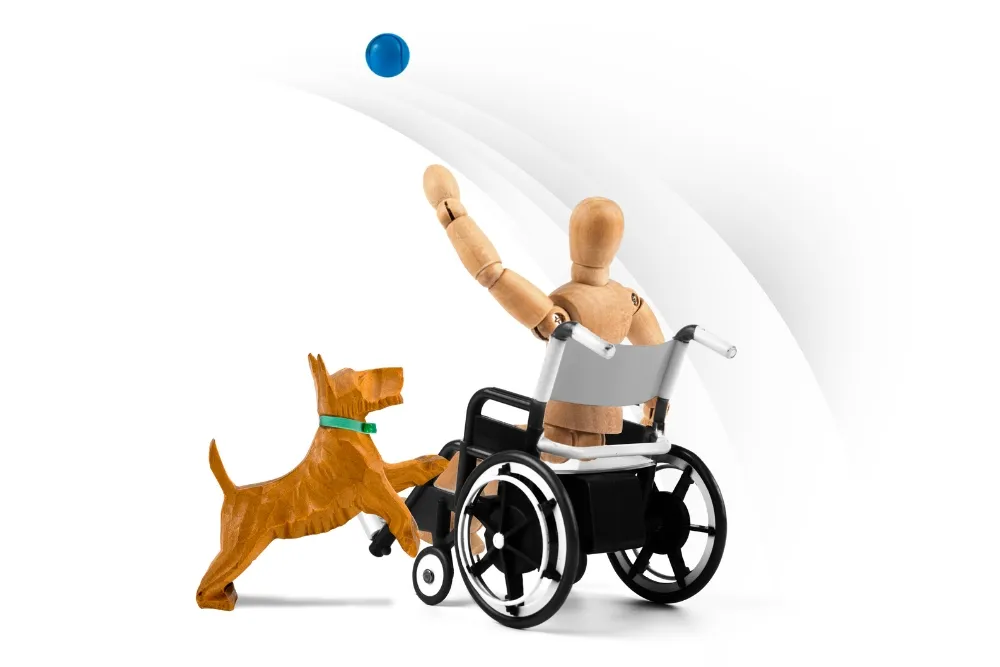
Voice-activated devices are changing the game for us in disability services. With simple spoken commands, we can control our environment like never before. Switching on lights, turning up the music, or calling a friend has become easier and more accessible for everyone, including those of us with mobility challenges.
These smart technologies offer independence and empower us to do everyday tasks without needing someone else’s help. They understand our voices and learn from our preferences, making life smoother and bridging gaps in physical abilities.
For senior citizens who might struggle with traditional devices, these voice-activated systems open up new doors to staying connected with loved ones and managing daily activities comfortably from home.
Image recognition
Moving on from voice-activated devices, let’s talk about image recognition. This technology uses artificial intelligence to identify and interpret visual data, making the world more accessible for people with disabilities.
For example, image recognition can help individuals who are blind or have low vision by describing the content of images through audio descriptions. It can also assist in identifying objects and recognising text, enabling greater independence and access to information.
Furthermore, image recognition has the potential to improve navigation for those with mobility challenges by providing real-time analysis of environments, such as detecting obstacles or guiding individuals through unfamiliar spaces.
OKO app
The OKO app uses artificial intelligence to provide a range of accessibility features for people with disabilities. It offers real-time audio descriptions, voice commands, and navigation assistance to help users navigate public spaces independently.
By leveraging image recognition and natural language processing, the app helps individuals with visual impairments identify objects and read written text. Furthermore, the OKO app promotes inclusivity by providing information in multiple languages and offering guidance on accessible routes.
Moving forward, let’s explore how virtual and augmented reality can enhance the daily lives of individuals with diverse abilities.
Accessibility audits using AI
We can now use AI to conduct accessibility audits in public spaces and buildings, helping to identify barriers for people with disabilities. By analysing images and data, this technology can pinpoint areas that need improvement, such as ramps, door widths, or signage.
This helps ensure that spaces are more inclusive and accessible to everyone, promoting equal opportunities for individuals with diverse abilities.
AI-powered accessibility audits hold the potential to make a significant impact on improving physical access for people with disabilities. With this innovative approach, we aim to create environments where everyone can move freely and independently without encountering unnecessary obstacles or barriers.
Leveraging ChatGTP
When discussing AI in disability services, it’s essential to explore the potential of leveraging ChatGTP. This innovative technology can revolutionise communication for individuals with disabilities through its natural language processing capabilities.
ChatGTP has the power to enhance accessibility by providing real-time support and facilitating seamless interactions, making it a valuable tool for improving daily living experiences.
Furthermore, ChatGTP opens up possibilities for personalised assistance and increased independence by enabling users to engage in conversations, seek information, and access resources more efficiently.
Large-scale visual speech recognition
Large-scale visual speech recognition uses advanced technology to interpret and understand spoken language through lip movements and facial expressions. This innovative tool can benefit individuals with diverse abilities by enhancing communication in noisy environments or when sign language interpreters are not available.
Visual speech recognition can help make conversations more accessible, providing a means of clear communication for people who are deaf or hard of hearing. With this technology, it becomes easier to participate in group discussions, watch videos, or engage in virtual meetings with real-time captioning support.
Furthermore, large-scale visual speech recognition empowers users by enabling greater participation in various activities where verbal communication is essential. The potential applications of this technology extend beyond personal interactions to educational and professional settings, making learning and working environments more inclusive for individuals with sensory disabilities.
Virtual and augmented reality
Transitioning from the capabilities of large-scale visual speech recognition, virtual and augmented reality open up new possibilities for individuals with disabilities. These technologies provide immersive experiences that can improve physical rehabilitation, treat phobias and anxiety, and make daily tasks more accessible.
Virtual reality offers a unique way to engage in activities that may otherwise be challenging due to physical limitations or sensory differences. Augmented reality has the potential to enhance accessibility by providing real-time information overlays to aid navigation and interaction with the environment.
By leveraging virtual and augmented reality, individuals with diverse abilities can access therapeutic interventions, experience simulated environments for incremental exposure therapy, and participate in inclusive recreational activities.
Internet of Things
Internet of Things technology allows devices to communicate with each other, making everyday tasks easier for us. For people with disabilities and senior citizens, this means smart home devices can be interconnected to create a more accessible and convenient environment.
From voice-activated lights and thermostats to remote-controlled door locks, the Internet of Things empowers individuals with diverse abilities to have greater independence within their homes. These smart devices can also provide reminders for medications or appointments, enhancing the overall quality of life.
Benefits of AI in Disability Services
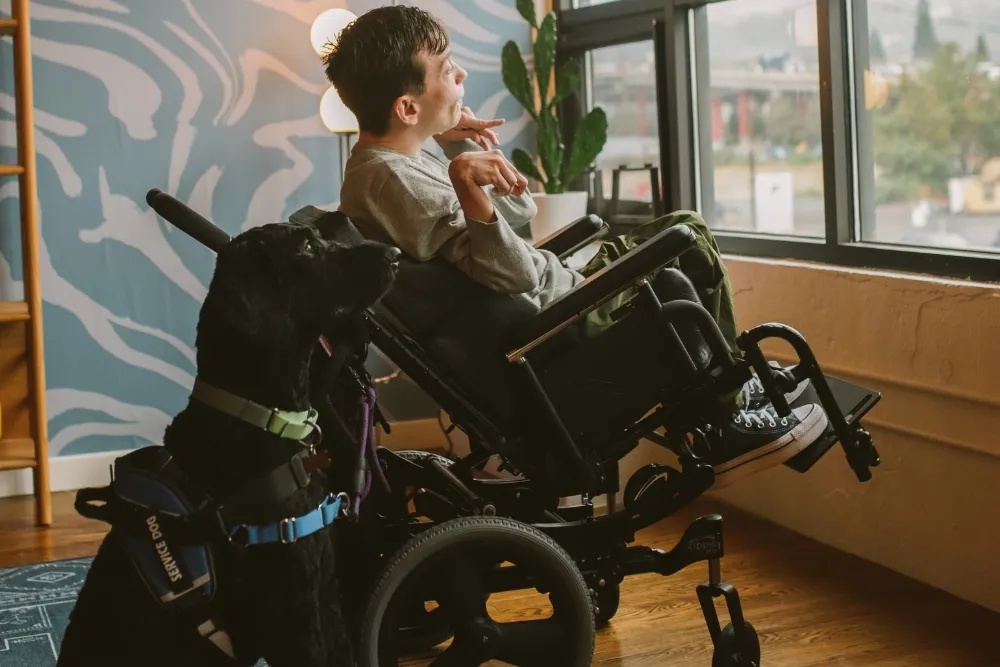
The introduction of AI in disability services has led to improved communication and connection, increased independence, and access to the same services as anyone else. Utilising open data for accessibility and audio beacons for public transportation are just some of the ways AI is making daily tasks and activities more accessible for individuals with diverse abilities.
Improved communication and connection
AI technology has revolutionised communication for people with disabilities. It enables us to use voice-activated devices and chat applications to communicate more easily. Image recognition tools help us understand the world around us, while virtual reality creates immersive experiences that can bridge communication gaps.
With AI, we can access the same services as anyone else and participate in social interactions without barriers. This innovative technology fosters better connections and empowers us to engage more fully in everyday life.
Furthermore, AI enhances our ability to connect with others through open data accessibility and audio beacons for public transportation. These tools make it easier for us to communicate and navigate our surroundings independently.
Increased independence
AI technology can help us gain more independence by making daily tasks and activities more accessible. With the assistance of voice-activated devices, we can control our environment and perform tasks without relying on others.
Using AI tools for physical accessibility, we can navigate public spaces with greater ease, from accessing public transportation to finding our way around independently. Additionally, remote activation capabilities enable us to control various devices and services from a distance, further enhancing our ability to manage everyday tasks without assistance.
Furthermore, AI offers opportunities for increased independence in areas such as education and employment through improved communication tools and access to the same services as anyone else.
Access to the same services as anyone else
You can access the same services as everyone else with the help of AI technology. Whether it’s through voice-activated devices, image recognition, or augmented reality, AI is breaking down barriers and creating equal opportunities for all.
With open data accessibility and audio beacons for public transportation, we are ensuring that individuals with diverse abilities have the tools they need to navigate the world just like anyone else.
By leveraging AI projects specifically designed for people with sensory disabilities and utilising assistive technology apps supported by artificial intelligence, we are working towards increased inclusivity in every aspect of life.
Greater inclusivity in signage and wayfinding
After ensuring access to the same services as anyone else, we can further enhance inclusivity by improving signage and wayfinding for people with disabilities. By leveraging AI technology, we can develop signages equipped with features such as braille, audio assistance, and high-contrast visuals to cater to individuals with diverse abilities.
Additionally, implementing AI-powered navigation systems in public spaces and transportation hubs could significantly improve mobility for people with disabilities. These advancements not only foster a more inclusive environment but also promote greater independence and confidence when navigating public spaces.
Incorporating AI into signage and wayfinding holds promise for revolutionising accessibility for people with disabilities by providing tailored support that addresses their specific needs.
Utilising open data for accessibility
By using open data, we can make our surroundings more accessible. We can access information about public transportation routes and schedules, ensuring that everyone has the necessary data to plan their journeys.
This way, we are empowered to advocate for change by highlighting areas that may need improvement in terms of accessibility. We can also work towards creating a more inclusive environment by utilising open data to identify barriers and push for solutions within our communities.
In addition, with open data, we have the potential to develop innovative apps and tools specifically designed to address the unique needs of individuals with disabilities. These resources can provide real-time information on accessible facilities and services in our local area.
Audio beacons for public transportation
Audio beacons provide real-time auditory information at transport hubs, guiding us through our journey. They emit signals that our smartphones can detect, allowing us to access detailed guidance such as platform numbers and service updates without relying on visual cues or assistance from others.
These audio beacons can enhance our confidence and independence while navigating public transport systems, enabling us to travel with greater ease and convenience. With the implementation of audio beacons in public transportation spaces, we gain improved accessibility and autonomy in our daily commutes.
In addition to easing navigation challenges for people with disabilities and senior citizens, audio beacons also create a more inclusive environment for everyone using public transport.
Remote activation for convenience
With the advancement of AI technology, remote activation systems have become more accessible and convenient for individuals with disabilities. These systems allow us to control electronic devices using voice commands or smartphone apps, providing greater independence and accessibility in our daily lives.
Whether it’s adjusting the thermostat, turning on lights, or opening doors, remote activation offers a new level of convenience that enhances our overall quality of life.
Moreover, integrating AI into remote activation devices can further tailor them to individual needs and preferences. Through personalised settings and learning algorithms, these systems can adapt to specific requirements, making them even more practical and user-friendly for people with diverse abilities.
Making daily tasks and activities more accessible
AI technology can make daily tasks and activities easier for us. Voice-activated devices assist in controlling appliances, making phone calls, and sending messages without using hands.
Image recognition helps with identifying objects or reading text aloud. The OKO app guides individuals through their surroundings by recognising objects and providing audio descriptions.
Virtual reality enhances physical rehabilitation and treats phobias and anxiety. It also has the potential to develop game-changing solutions for diverse abilities. Utilising open data via AI ensures accessibility, while audio beacons ease public transportation navigation.
Improved physical rehabilitation with VR
Virtual reality (VR) technology allows us to engage in immersive experiences that can aid in physical rehabilitation. Through VR, we can participate in interactive exercises and simulations designed to improve strength, balance, and mobility.
This innovative approach provides a stimulating and engaging environment for therapeutic activities such as stretching, coordination exercises, and muscle-strengthening routines tailored to individual needs.
In addition, VR offers an enjoyable way to practice hand-eye coordination and fine motor skills through virtual games and activities. The ability to track progress over time using VR technology also enhances motivation and encourages individuals with disabilities or limited mobility to actively participate in their rehabilitation journey.
Treating phobias and anxiety with VR
Using VR technology, we can help individuals manage and overcome their phobias and anxieties. Virtual reality creates immersive environments that simulate real-life situations in a safe and controlled setting.
By exposing individuals to their fears gradually, they can learn coping mechanisms and reduce anxiety over time. This method has shown promising results in treating various phobias, including fear of heights, flying, public speaking, and more.
Through tailored VR experiences, people with disabilities can access effective treatment options for their mental health concerns.
The potential for game-changing developments
AI and virtual reality have the potential to bring about groundbreaking changes in disability services. These technologies can improve physical rehabilitation by creating immersive environments for therapy, making treatments more effective and engaging.
Additionally, AI-powered assistive devices are being developed to provide individuals with diverse abilities and greater independence in their daily lives, offering innovative solutions for accessibility challenges.
As these advancements continue to evolve, they hold promise for revolutionising the way disability support services are delivered.
In addition to AI and virtual reality, the Internet of Things (IoT) presents an exciting frontier for disability inclusion. With IoT devices and sensors becoming more prevalent, there is growing potential to create smart environments that cater specifically to the needs of people with disabilities.
Game Changer for Disability Services
In short, AI holds immense potential to revolutionise disability services. It enhances communication, increases independence and inclusivity, and makes daily tasks more accessible.
With VR and IoT, individuals with diverse abilities can actively participate in various activities. In conclusion, AI is a game changer in disability support services, ushering in a new era of accessibility and inclusion for all.