
Creating spaces that truly cater to everyone’s needs can be quite a tall order, and it hits close to home for those of us with friends and relatives living with disabilities. We’ve all felt that pinch, but did you know there’s a bit of bright news? Research has been banging on about how nature does wonders for our wellbeing.
Let’s wrap our heads around designs that mix the great outdoors with accessible living – trust me, you’ll discover some real beaut ideas!
Key Takeaways
- Biophilic design in architecture brings elements of nature into buildings, improving the well-being and quality of life for people with disabilities.
- Using natural light, colours, materials, and shapes can make spaces more inclusive by promoting air purification and providing a calming environment.
- Workplaces, homes, and healthcare facilities benefit from biophilic design as it promotes productivity, and healing and creates barrier-free environments suitable for all abilities.
- Innovation in biophilic architecture introduces technologies like gesture-controlled systems or sensory gardens that specifically cater to different disabilities.
- Nature-inspired architectural designs are not just aesthetically pleasing; they actively contribute to better mental health and reduced stress for individuals with disabilities.
Understanding Biophilic Design and Its Benefits for Disability Services
Biophilic design focuses on bringing nature into the built environment, promoting a sense of connection with the natural world and improving overall well-being. By incorporating natural elements and materials in architecture, we can create harmonious and inclusive spaces for disability services, enhancing the quality of life for individuals with disabilities.
Bringing nature indoors
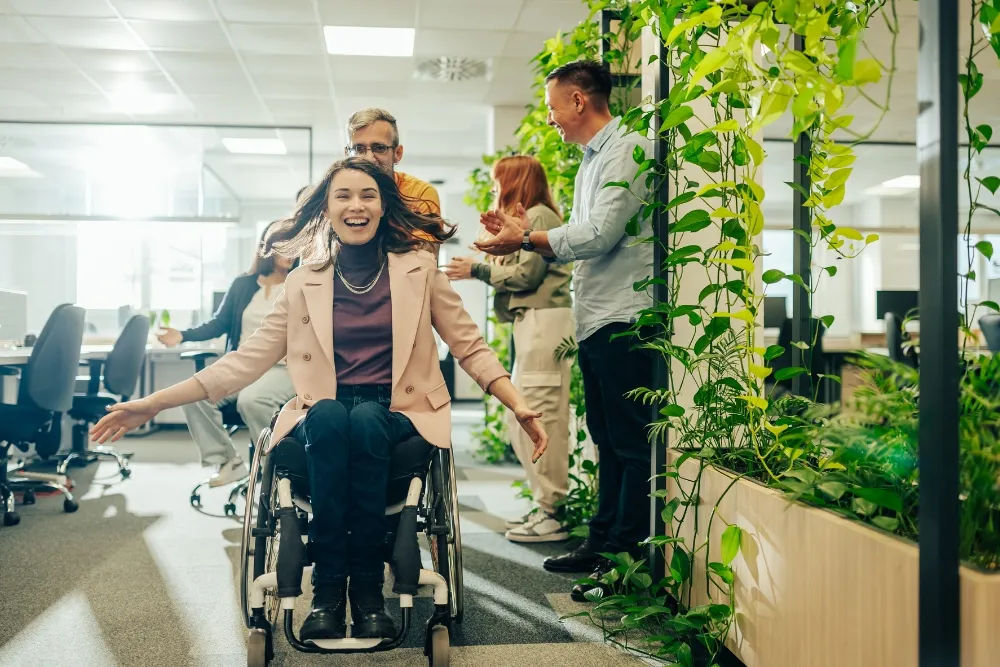
We’ve got to admit, that nothing beats the fresh feel of nature’s touch within our walls. Imagine the calm that comes from a room bathed in sunlight, filled with potted plants and draped in natural fabrics.
We create tranquil havens by weaving greenery and natural textures throughout our homes and workplaces, ensuring spaces aren’t just accessible but also restful for us all.
In these living areas, we embrace ecofriendly architecture that not only looks good but does good. Picture airy rooms where air-purifying plants add a dash of verdant life, while wooden accents bring warmth and organic charm.
It’s about crafting environments where every one of us can thrive, where nature meets nurture without barriers. Now let’s turn our attention to connecting more deeply with the great outdoors right from where we are.
Bridging the gap between humans and nature
By incorporating elements of nature into our built environment, we create spaces that are more inviting and supportive for everyone. Natural light, greenery, and natural materials can help to improve the aesthetics of a space while also promoting better air quality and a sense of calm.
When these elements are integrated into architecture for disability services, they can provide a sense of harmony and connection with the natural world. This approach to design not only benefits those with disabilities but also contributes to an overall feeling of inclusivity and well-being for all individuals.
In embracing biophilic design principles, we’re not just creating functional spaces; we’re fostering an environment where people feel connected to nature in their everyday lives. The incorporation of sustainable designs, harmonious integration with nature, and accessible spaces promotes a more inclusive experience for all abilities.
Incorporating Natural Elements and Materials in Architecture
We can enhance the design by utilising natural light and colour to create a soothing environment. Additionally, we can incorporate natural shapes and materials to promote air purification and improve overall well-being.
Using natural light and colour
We can enhance the ambience and functionality of spaces for disability services by leveraging natural light and colour. Here’s how:
- Implement large windows and skylights to maximise natural light, creating a brighter, more inviting atmosphere.
- Strategically use warm hues like yellows and oranges to promote a cosy and comforting environment without overwhelming sensory perceptions.
- Utilise cool tones such as blues and greens to evoke a sense of tranquillity and relaxation within the space.
- Incorporate adjustable lighting systems to accommodate varying preferences or sensitivities to light.
- Introduce reflective surfaces to bounce natural light around the room, reducing the need for artificial lighting while maintaining an airy feel.
- Employ colour contrast techniques to aid visually impaired individuals in navigating their surroundings effectively.
- Combine natural elements with light and colour schemes to create an organic and restorative atmosphere that caters to diverse needs effectively.
Incorporating natural shapes and materials
- Utilising organic forms in the building’s structure, such as curved walls and arches, to create a sense of flow and harmony within the environment.
- Implementing natural materials like wood, stone, or bamboo in construction to introduce tactile diversity and evoke a connection with the outdoors.
- Incorporating green walls or living roofs to bring vegetation into the built environment, enhances air quality while offering visual stimulation.
- Introducing biomimicry principles in design, mimicking patterns found in nature to create visually appealing and functional elements.
Promoting air purification
Incorporating natural shapes and materials into the architecture not only enhances the aesthetic appeal but also contributes to promoting air purification. By strategically incorporating green walls, indoor plants, and natural ventilation systems, we can actively improve indoor air quality.
These elements help filter out pollutants and increase oxygen levels within built environments, creating a healthier and more refreshing atmosphere that is particularly beneficial for individuals with disabilities or senior citizens.
When designing spaces for disability services, it’s essential to prioritise air purification through nature-inspired architectural elements. The integration of these features not only enhances the overall ambience but also positively impacts the well-being of occupants by providing clean and fresh indoor air.
Biophilic Design in Different Settings for Disability Services
Incorporating biophilic design in workplace environments can improve productivity and overall well-being for individuals with disabilities. Additionally, creating residential spaces and healthcare facilities with natural elements can contribute to a sense of calm and healing.
Workplace
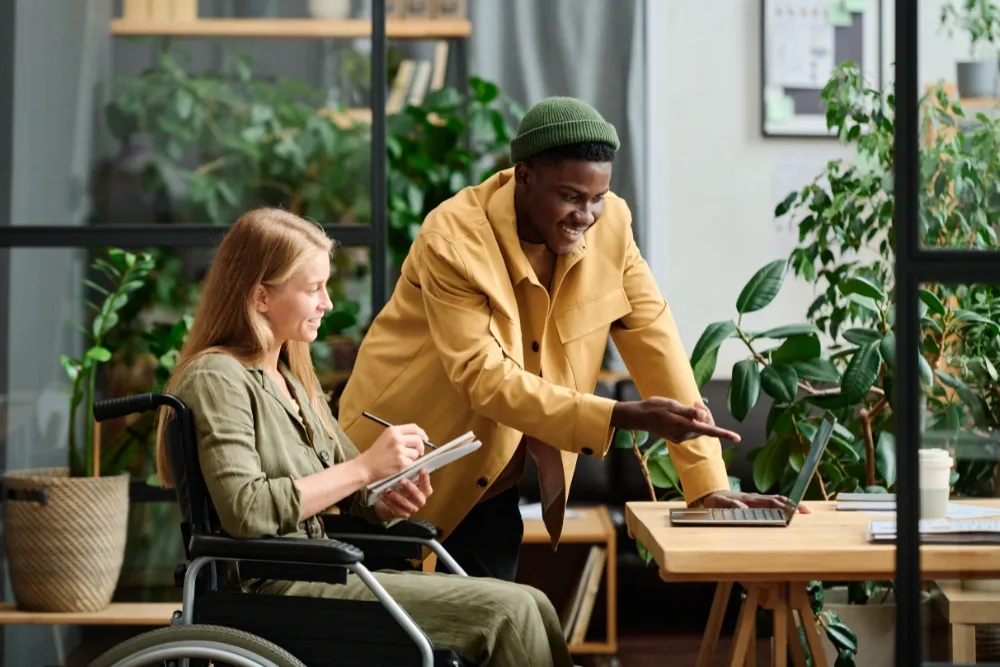
We can create work environments that promote well-being and inclusivity through nature-inspired architecture. Natural light, greenery, and open spaces in the workplace can enhance our productivity and reduce stress.
By incorporating biophilic design elements such as natural materials, living walls, and access to outdoor views, we can cultivate a harmonious workspace that caters to the diverse needs of individuals with disabilities.
At work, nature-inspired architectural features like accessible gardens or sensory outdoor areas can provide a calming retreat for employees with disabilities. Integrating universal design principles into office spaces ensures that everyone has equal access to natural elements, promoting a more holistic approach to architecture.
These thoughtful designs offer opportunities for relaxation and connection with the surrounding environment while enhancing the overall experience of working in an inclusive workplace.
Embracing these concepts not only benefits those with disabilities but also contributes to a more sustainable and enriching work environment for all.
Residential spaces
After considering biophilic design in workplace settings, we realise the importance of bringing nature-inspired architecture into residential spaces for disability services. The incorporation of natural elements and materials can greatly enhance living environments.
By promoting air purification, using natural light and colour, and integrating natural shapes and materials, we can create harmonious residential spaces that positively impact the well-being of individuals with disabilities.
It’s essential to consider inclusive design for all abilities when creating nature-inspired homes to ensure accessibility and a holistic integration with nature.
Inclusive design principles should be incorporated into every aspect of residential spaces, from the layout to the choice of materials used. Green building techniques provide sustainable and environmentally friendly options for constructing disability-friendly housing that seamlessly integrates with the natural environment.
Healthcare facilities
Turning from residential spaces to healthcare facilities, it’s crucial to ensure that nature-inspired design extends into these environments as well. Green spaces and natural elements can have a significant positive impact on the well-being of individuals with disabilities and senior citizens.
By incorporating biophilic design principles, such as access to natural light, indoor plants, and soothing natural materials, we can create healing environments that promote overall health and comfort.
In healthcare settings, sustainable architecture plays a vital role in providing barrier-free design solutions for disabilities. From urban hospitals to remote care facilities, integrating green spaces and nature-based solutions not only enhances the aesthetic appeal but also contributes to holistic well-being in built environments.
The Future of Biophilic Architecture for Disability Services
We explore the potential impact of innovative biophilic design on improving the quality of life for individuals with disabilities. Read more about how nature-inspired architecture can create harmonious spaces for disability services.
Innovations in biophilic design
- Gesture-controlled lighting systems allow individuals with limited mobility to easily adjust their environment.
- Sensory gardens equipped with interactive features provide an immersive experience for people with visual or cognitive impairments.
- Virtual reality simulations are being used to help architects and designers better understand the needs of different disabilities and create more tailored spaces.
- Smart materials that adapt to temperature changes or noise levels are being implemented to enhance comfort and accessibility.
- Biophilic designs now incorporate dynamic landscapes, such as adjustable floor surfaces, enabling easy movement for wheelchair users without compromising aesthetics.
Potential impact on improving quality of life for individuals with disabilities
As we explore the potential impact of biophilic design on improving the quality of life for individuals with disabilities, it becomes evident that incorporating natural elements and green spaces into architecture can significantly enhance overall well-being.
Accessible design featuring nature-inspired elements such as natural light, colours, and materials can create inclusive environments that promote a sense of calm and connection with the surroundings.
This holistic approach to architecture not only fosters physical comfort but also supports mental health by providing restorative spaces that encourage relaxation and reduce stress levels.
Furthermore, integrating biophilic design in disability services settings like workplaces, residential areas, and healthcare facilities offers opportunities for increased access to nature-based solutions.
By bringing the outdoors inside or creating barrier-free connections to urban parks or remote locations, individuals with disabilities can benefit from improved air quality, reduced anxiety, and a greater sense of empowerment within their living or working environments.
Appreciate Nature in Architecture
In conclusion, nature-inspired architecture offers a promising approach to creating harmonious spaces for disability services. Integrating natural elements and materials in architecture can enhance the well-being of individuals with disabilities. Get in touch with us to learn more about nature-inspired architecture for a harmonious space.
With innovations in biophilic design, there is potential to significantly improve the quality of life for people facing mobility challenges or other disabilities. Nature-based solutions present an opportunity for promoting barrier-free and accessible design, fostering inclusive and holistic environments that cater to the diverse needs of disabled individuals and senior citizens.