
Technology is changing lives in ways we never imagined, and nowhere is this more evident than in disability care. Innovative assistive technologies are empowering individuals with disabilities to lead more independent, fulfilling, and connected lives. From smart home devices to AI-powered mobility aids, these advancements are reshaping how people access care and interact with the world.
The Role of Assistive Technology in Disability Support
Assistive technology refers to tools, devices, and software designed to improve the quality of life for individuals with disabilities. Whether it’s a speech-generating device or an advanced prosthetic limb, these innovations enhance mobility, communication, and day-to-day activities.
With new technologies emerging every year, the focus is shifting towards personalisation and accessibility. Today, assistive devices are not just functional, they are designed to integrate seamlessly into everyday life, ensuring people with disabilities have the same opportunities as everyone else.
Game-Changing Assistive Technologies
So, what are the latest innovations transforming disability care? Here are some of the most exciting assistive technologies making a real difference.
1. Smart Home Technology for Independence
Smart home devices have revolutionised independent living, giving people with disabilities greater control over their environment. Voice-activated assistants like Amazon Alexa and Google Home enable users to manage lighting, appliances, and security systems with simple voice commands.
Smart locks and automated doors provide enhanced accessibility, allowing individuals to enter and exit their homes without physical effort. These technologies empower individuals with mobility impairments to live more autonomously while improving overall safety.
2. Wearable Devices for Health Monitoring
Health-monitoring wearables, such as smartwatches and biosensors, help individuals with disabilities track vital health data. Devices like the Apple Watch and Fitbit can monitor heart rate, oxygen levels, and sleep patterns, offering real-time insights into overall well-being.
For people with epilepsy, seizure-detecting wearables can alert carers or emergency services when needed. These innovations provide peace of mind while allowing individuals to take greater control of their health.
3. AI-Powered Communication Aids
For individuals with speech or hearing impairments, AI-powered communication devices are life-changing. Text-to-speech and speech-to-text applications enable seamless communication, allowing people to express themselves with ease.
Eye-tracking technology has also made significant strides, particularly for those with conditions like motor neurone disease (MND) or cerebral palsy. Devices that track eye movements allow users to type messages, browse the internet, and even control their environment, all without needing to speak or use their hands.
4. Mobility Innovations and Smart Wheelchairs
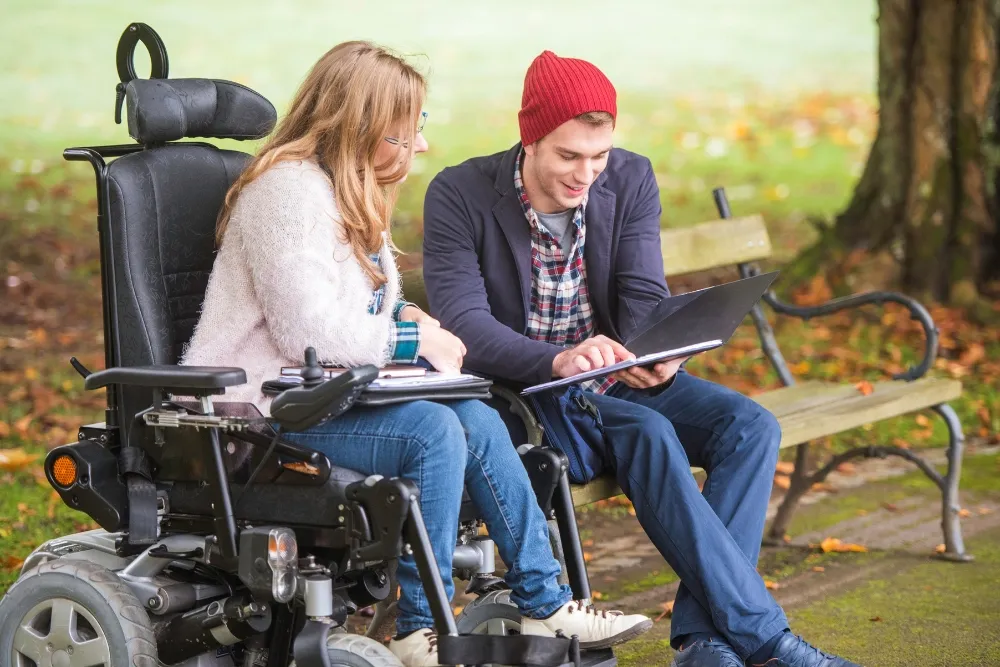
Traditional wheelchairs are evolving with cutting-edge technology. Smart wheelchairs equipped with AI-driven navigation help users move independently, even in complex environments. These chairs can detect obstacles, suggest alternative routes, and integrate with voice control systems.
Exoskeletons are another exciting development, enabling people with mobility impairments to stand, walk, and even climb stairs. While still in the early stages of adoption, these devices offer life-changing possibilities for individuals with spinal cord injuries or neurological disorders.
5. Augmented and Virtual Reality for Therapy and Training
Augmented Reality (AR) and Virtual Reality (VR) are transforming rehabilitation and skill-building for individuals with disabilities. These immersive experiences are used for physical therapy, helping individuals regain mobility through virtual exercises.
For those with autism or social anxiety, VR-based training programs provide a safe space to practice real-world interactions, improving confidence and social skills. By simulating real-life scenarios, these technologies support learning and independence in a controlled environment.
6. Assistive Robotics for Daily Support
Robotic assistance is no longer just the stuff of science fiction. Robots designed for disability care are now providing essential support for tasks like meal preparation, personal care, and companionship.
Social robots, like ElliQ and Paro, offer emotional support, particularly for individuals with cognitive impairments or loneliness. These AI-driven companions engage users with conversation, reminders, and even entertainment, enhancing mental well-being.
The Future of Assistive Technology in Disability Care
The future of assistive technology is brighter than ever, with ongoing research and development focusing on greater accessibility, affordability, and personalisation. Advancements in AI, machine learning, and biotechnology promise to bring even more revolutionary solutions to disability care.
As these innovations continue to evolve, it’s essential for individuals with disabilities and their families to stay informed about available options. Understanding how these technologies work and how they can be integrated into daily life can significantly enhance quality of life and independence.
Accessing Assistive Technology Support
Finding the right assistive technology solution depends on individual needs, funding availability, and access to professional guidance. If you’re looking for expert advice on assistive technologies, ConnectAbility’s Disability Services can help you explore the best options for your needs. Their dedicated team provides tailored support to ensure you can access the right tools to enhance your independence.