
Searching for a home that champions independent living can be a real challenge, one that we’re all too familiar with. We’ve uncovered a striking fact in the process: a mere 6% of Aussie homes are built with accessibility at the forefront.
With this insight, we’ve dedicated our efforts to finding innovative housing solutions designed specifically for supported independent living. Our discoveries shine a light on the hopeful and inclusive options available for the future of housing down below.
So, let’s dive into what’s out there!
Key Takeaways
- Homes built with accessibility in mind are rare in Australia, with only 6% meeting this criteria. This highlights the urgent need for innovative housing solutions tailored to support independent living.
- A variety of housing options are being explored to meet these needs, such as cooperative living with supportive technology and inclusive mixed-private and social housing. These designs aim to increase independence and foster community connections for individuals requiring supported independent living.
- Adapting homes with features specific to disabilities can greatly enhance quality of life. Examples include walk-in showers, adjustable worktops, and smart technology that assists daily activities, demonstrating a move towards more personalised accommodation solutions.
- Collaborating with housing providers and developers is key to creating diverse and innovative housing options that prioritise accessibility and inclusion, ensuring homes cater specifically to individual needs and preferences.
- Prioritising accessible design in new housing developments is crucial for supporting people with disabilities or seniors seeking independence. By focusing on inclusion, we work towards building communities where everyone has the opportunity to live comfortably and autonomously.
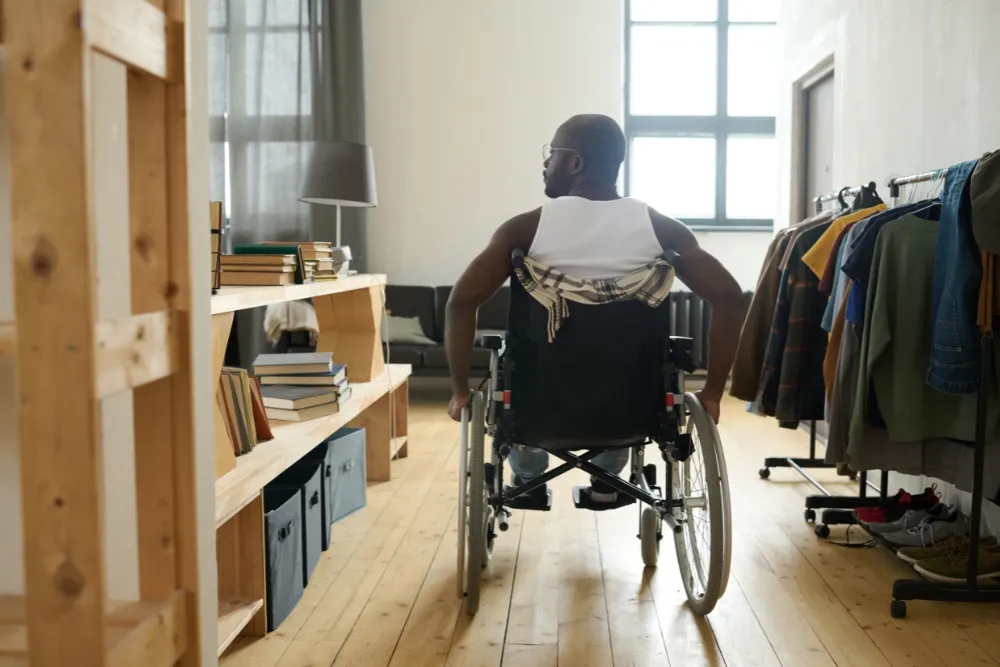
The Need for Innovative Housing for Supported Independent Living
Creating diverse and innovative housing options is essential to meeting the varied needs of individuals requiring supported independent living. The slow increase in the supply of specialist disability accommodation (SDA) underscores the pressing need for more accessible and inclusive housing designs.
Lack of diversity and innovation in housing options
Finding diverse and innovative housing options has become a challenge for us. Many current homes don’t meet our varied needs, especially when it comes to supporting independent living.
We see the same types of buildings everywhere, ones that often forget about accessibility and inclusivity. This makes it tough for those of us with disabilities or who are senior citizens to find suitable places where we can live comfortably and independently.
We need homes that think outside the box, incorporating features like supportive technology and adaptive designs tailored specifically for disabled individuals. Yet, these innovative houses are scarce.
The slow pace at which new Specialist Disability Accommodation (SDA) is being introduced adds to this issue, leaving many of us feeling stuck without suitable options. It’s clear there’s a pressing need for more variety in housing that keeps all members of our community in mind.
The slow increase in the supply of Specialist Disability Accommodation (SDA)
The slow increase in the availability of Specialist Disability Accommodation (SDA) has been a significant challenge for individuals seeking supported independent living options. Housing providers and developers are gradually expanding the supply of disability-friendly housing, but there is still a need for more diverse and innovative housing solutions to meet the growing demand.
We have seen an increase in inclusive housing models, like cooperative living with supportive technology and mixed private and social housing, which aim to provide accessible features tailored towards specific disabilities.
However, investment in more SDA options remains crucial to ensuring that disabled individuals have access to appropriate accommodations that support their independence and well-being.
The Benefits of Accessible and Inclusive Housing Designs
Accessible and inclusive housing designs enhance independence and choice for individuals with disabilities, as well as improve their connections within the community. These designs also provide greater access to necessary support services, further enriching the lives of residents.
Increased independence and choice
Innovative housing designs offer more independence and choice for individuals with disabilities. These housing options are designed to meet various needs and preferences, allowing residents to live more autonomously.
Accessible features such as wider doorways, lever handles, and adjustable countertops enable easier navigation within the home. Additionally, inclusive community living models provide opportunities for social engagement and support networks, fostering a sense of autonomy and empowerment in daily life.
By embracing innovative housing solutions that prioritise accessibility and inclusivity, individuals can experience greater independence in their living accommodations.
Improved community connection and access to support
Accessible and inclusive housing designs foster improved community bonds and better access to vital support services for individuals with disabilities. These innovative designs promote social interaction and participation in local neighbourhoods, offering a sense of belonging and connection while also increasing access to support networks.
Through thoughtful planning and design, our housing solutions prioritise creating spaces that encourage collaboration, shared experiences, and easy access to essential amenities.
Inclusive housing not only fosters connections within the community but also provides easier navigation towards vital support systems. Our cooperative living models are designed to enhance accessibility by promoting social inclusion, enabling residents to tap into robust networks of care providers and communal assistance.
Examples of Innovative Housing Solutions
Examples of innovative housing solutions include cooperative living arrangements integrated with supportive technology, inclusive mixed private and social housing developments, and adaptive features tailored for specific disabilities.
These designs are aimed at enhancing independence and accessibility for individuals while fostering a sense of community and support.
Co-operative living with supportive technology
Cooperative living with supportive technology offers a communal living environment where individuals share common spaces while having their own private accommodations. Integrating smart home technology, such as voice-activated devices and remote monitoring systems, ensures safety and convenience for residents.

This promotes independence while providing the necessary support. Residents can manage daily tasks more easily, from adjusting room temperature to controlling lighting and accessing emergency assistance when needed.
Such collaborative living arrangements, combined with assistive technologies, create a supportive and inclusive community tailored towards individual needs.
By establishing cooperative housing equipped with state-of-the-art technology, residents have greater autonomy and improved access to the resources they require for independent living.
Inclusive mixed-private and social housing
Transitioning from cooperative living with supportive technology, let’s now delve into the realm of inclusive mixed private and social housing. These housing options integrate a mix of privately owned homes and social housing units within the same community.
This approach promotes inclusivity by fostering interactions between people from diverse backgrounds and providing an environment where everyone feels welcome and supported. Inclusive mixed private and social housing also encourages greater integration with the wider community, thereby enhancing social connections and reducing isolation for disabled individuals or senior citizens who require supported living options.
These properties are meticulously designed to cater to various accessibility needs, ensuring that residents can navigate their homes independently. With adaptive features seamlessly integrated into both private and social units, inclusive mixed housing provides a supportive environment that prioritises accessibility for all individuals.
Adaptive features for specific disabilities
Transitioning from inclusive mixed private and social housing to adaptive features for specific disabilities, we acknowledge the importance of tailored solutions for various disabilities.
These include, but are not limited to, specialised equipment such as grab bars and ramps, accessible bathroom fixtures like walk-in showers or tubs with built-in seats, adjustable countertops in kitchens, and smart home technology for ease of access.
Each solution aims to enhance independence and comfort for individuals living with unique needs.
Improving the Future of Supported Independent Living
Investing in a broader range of diverse and innovative housing options is essential for the future of supported independent living. Collaboration with housing providers and developers, prioritising accessibility and inclusion in design, and considering individual needs are crucial steps to improving housing solutions for those seeking greater independence.
Investing in more diverse and innovative housing options
Investing in diverse and innovative housing options is crucial to meeting the varied needs of people with disabilities and senior citizens. By prioritising accessibility and inclusion in housing design, we can create living spaces that cater to individual requirements while fostering independence.
Collaborating with housing providers and developers is essential for bringing about these changes. This involvement will help ensure that new housing constructions incorporate adaptive features, cooperative living arrangements, and inclusive mixed private and social housing models to address the specific needs of disabled individuals and seniors.
Innovative solutions are needed in disability-friendly housing design, ones that include supportive technology as well as a mix of specialised accommodations tailored for specific disabilities.
Collaborating with housing providers and developers
Collaborating with housing providers and developers is crucial for creating more diverse and innovative housing options. By working together, we can prioritise accessibility and inclusion in housing design and development, ensuring that homes are tailored to individual needs and preferences.
This collaboration will lead to the creation of disability-friendly, adaptive housing features that cater to a range of specific disabilities. It’s not just about investing in more accessible housing; it’s about actively engaging with developers to ensure that future housing solutions are designed to enhance the lives of disabled individuals and senior citizens.
Let’s move forward by partnering with developers to make inclusive housing a reality for all.
Prioritising accessibility and inclusion in housing design and development
We prioritise making housing accessible and inclusive for everyone. We ensure that our designs consider specific needs and preferences, creating a welcoming environment for people with disabilities and senior citizens.
Our goal is to collaborate with housing providers and developers to invest in diverse and innovative options that enhance independence, community connection, and overall well-being.
We prioritise accessibility by integrating adaptive features tailored to specific disabilities, ensuring that all individuals have the opportunity to live comfortably in their desired living space.
Our focus on inclusion means that we strive to create mixed private and social housing models, promoting diversity within communities. This approach fosters an environment where support networks are readily available while encouraging independence and choice.
Considering individual needs and preferences in housing solutions
We prioritise housing solutions tailored to your individual needs and preferences, ensuring that your unique requirements are met. Our suite of innovative designs is meticulously crafted to enhance your everyday life, not only providing accessibility but also prioritising comfort and functionality.
Investing in accessible and inclusive housing options is designed to accommodate the ever-evolving world of disability-friendly housing. Embarking on this journey means seeking more than just a place to live; it’s about creating a home that empowers you to thrive within an inclusive community.
Diving into the heart of our approach, we aim to unlock the secrets of specialised disability housing by collaborating with developers who understand the complexities of disability accommodation innovation.
Embrace Supported Independent Living
Improving the future of supported independent living involves investing in diverse and innovative housing options. Collaborating with housing providers and developers is crucial to prioritising accessibility and inclusion in housing design.
Considering individual needs and preferences for tailored solutions also underpins our commitment to enhancing the realm of disability-friendly housing. Contact us and unlock the secrets of independent living, promoting community connection and increased independence for all.