
We all recognise the struggle of sifting through endless health options, only to end up with off-the-shelf remedies that don’t quite fit the bill. Just like you, we’ve grappled with systems and solutions that seem to miss the personal touch we’re after.
But here’s a bit of good news – AI has become the quiet achiever in turning healthcare on its head. With about 30% of worldwide data pouring out from our very own health industry, smart tech is now paving the way for care that gets us.
Our yarn today delves into how artificial intelligence isn’t just reshaping, but revolutionising support networks to be as individual as a fingerprint, making sure no mate misses out on their road to wellness.
Key Takeaways
- AI is changing healthcare by making treatments and support systems specific to each person’s health needs.
- With AI, doctors can use loads of medical data to predict health risks early and make more accurate treatment plans that match individual patients.
- Artificial intelligence helps us manage our health at home through remote monitoring tools like smartwatches and virtual assistants, so we get the right care quickly.
- To make sure AI works well in healthcare, it’s important to look after people’s privacy and personal info, plus understand how laws work around this tech.
- The future of using AI in healthcare is bright. It’ll keep getting better at providing customised help for everyone’s unique health journey.
The Role of Artificial Intelligence in Personalised Healthcare
Artificial intelligence plays a crucial role in personalised healthcare, revolutionising the way patient care is delivered. From data analysis and predictive modelling to personalised treatment plans and remote monitoring, AI enables tailored support systems that cater to individual needs.
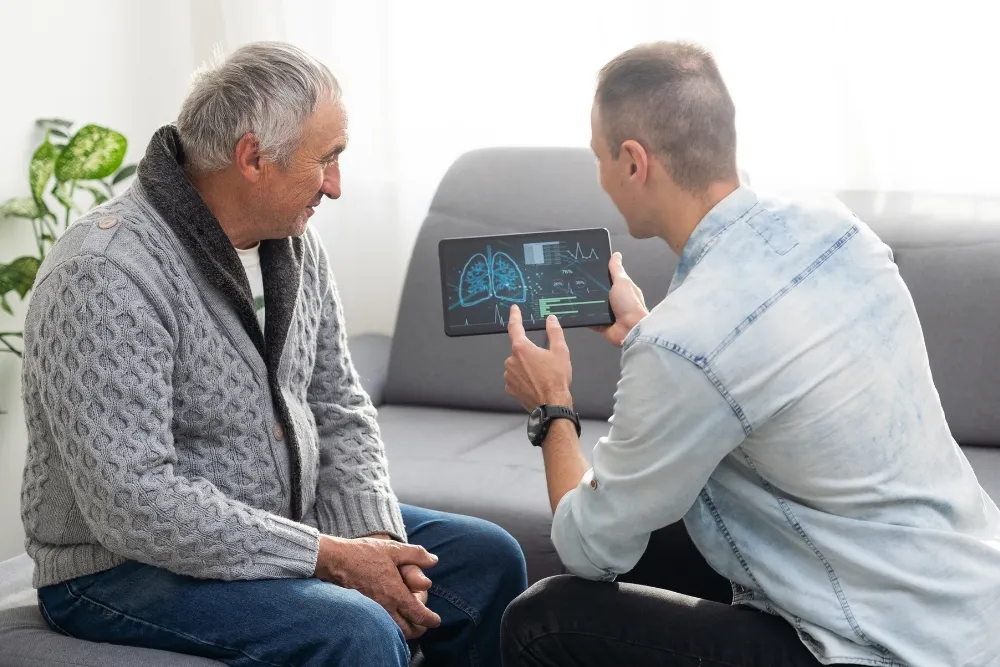
Understanding personalised healthcare
We see personalised healthcare as a game-changer for our community, especially for those of us who are living with disabilities or have stepped into our senior years. It’s all about medical care tailored specifically to your individual needs, considering your unique health history, genes, lifestyle, and preferences.
Think of it like a suit stitched just for you instead of one picked off the rack, it fits better because it’s designed with only you in mind.
By embracing AI in personalised care, we’re witnessing a revolution in how treatment plans are created and delivered. Healthcare personnel use intelligent systems to sift through mountains of medical data analysis much faster than ever before.
This helps them pinpoint the most effective treatment options and health information that aligns precisely with what each person requires. From AI-powered clinical decision support to adaptive care systems, this approach ensures that patient support is more accurate and responsive than traditional methods could ever offer.
How AI enables personalised healthcare
Artificial intelligence (AI) in healthcare uses advanced technology to tailor support systems for individuals like us. By analysing data, AI helps doctors create personalised treatment plans based on our unique medical history and needs.
This means we receive customised care that fits our specific health requirements, leading to better outcomes and improved quality of life. Additionally, AI enables remote monitoring and telemedicine, allowing us to access healthcare services from the comfort of our homes.
Furthermore, AI assists in clinical decision-making by providing valuable insights into potential risks, early detection of diseases, and drug discovery. With this technology at work in healthcare, we can feel more confident about receiving the right care at the right time.
As AI continues to revolutionise personalised medicine, we can expect even more tailored support systems designed specifically for each individual’s health journey.
Data analysis and interpretation
We analyse the data to understand your health needs and tailor our support accordingly. By interpreting this information, we can create personalised treatment plans using artificial intelligence.
This analysis helps us predict risks earlier, enabling us to provide proactive care and intervene before issues worsen. We also use data to develop drugs that are better suited for your unique healthcare needs without compromising safety.
Predictive modelling and early detection
Predictive modelling and early detection use advanced technology to anticipate potential health issues before they become serious. AI analyses your health data to identify patterns and trends, allowing doctors to intervene early and provide timely treatment.
By leveraging AI-powered predictive models, healthcare providers can offer proactive support tailored to your specific needs, potentially preventing complications down the line.
These innovative solutions ensure that you receive prompt care, helping you remain healthy and independent for longer. With early detection systems in place, we can monitor your well-being closely and address any concerns swiftly, empowering you to live life to the fullest.
Drug discovery and development
We use artificial intelligence to find new drugs and make sure they are safe for everyone. AI helps researchers by analysing lots of data quickly. It can spot patterns that humans might miss, making the discovery process faster and more effective.
New treatments can be tailored to suit different people’s needs, providing a better chance of finding the right solution for individual health concerns.
Drug discovery and development with the help of artificial intelligence has revolutionised healthcare, offering personalised treatment plans suited to each person’s unique requirements.
Personalised treatment plans
When creating personalised treatment plans, we tailor our approach based on your unique health needs. AI helps us analyse your medical history and genetic data to develop customised care strategies.
These plans consider factors like your lifestyle, preferences, and potential side effects of treatments. They aim to maximise the effectiveness of interventions while minimising any adverse impacts on your daily life.
By leveraging AI technology, we can ensure that you receive the most suitable therapies and support for managing your conditions.
Our goal in designing these individualised treatment plans is to empower you with information about different options and assist you in making informed decisions about your healthcare journey.
Remote monitoring
Remote monitoring involves the use of technology to keep track of your health data from a distance. This can include devices like smartwatches that measure your heart rate and activity levels, or sensors that monitor blood sugar levels for diabetics.
These devices can send information to healthcare providers in real time, allowing them to keep an eye on your health without you needing to visit the clinic as often.
Using AI and remote monitoring tools allows healthcare professionals to identify potential issues early, which means you can get the help you need sooner. It also gives you more control over managing your condition and helps ensure that any changes in your health status are quickly noticed and addressed.
Clinical decision support
Artificial intelligence helps doctors make better decisions about your healthcare. It analyses medical information and suggests the best treatments for your health condition. AI can alert the doctor if something seems risky, making sure you’re receiving safe care.
AI also keeps track of your health data, reminding you and your doctor when it’s time for a check-up or to take medicine. This means you don’t have to worry about remembering everything on your own – let technology help keep you healthy!
Patient risk stratification
Patient risk stratification involves using artificial intelligence to assess an individual’s likelihood of developing certain health conditions. By analysing data such as medical history, genetic predisposition, and lifestyle factors, AI can help identify those at higher risk for specific diseases.
This allows healthcare providers to tailor preventive measures and interventions specifically to each person’s needs. For example, AI can assist in identifying seniors who may be at risk of falls or disabled people who are prone to pressure ulcers, enabling proactive strategies to reduce these risks and improve overall quality of life.
Additionally, AI supports early detection of potential complications or deterioration in health status, allowing for timely intervention and personalised care plans tailored to individual needs.
Telemedicine and virtual health assistants
Telemedicine and virtual health assistants offer convenient access to healthcare for people with disabilities and seniors. Virtual appointments enable us to consult healthcare professionals from the comfort of our homes, reducing travel barriers and making it easier to seek medical advice.
Additionally, AI-powered virtual health assistants can provide personalised health information and reminders, helping us manage medications, track symptoms, and stick to treatment plans.
These tools revolutionise allied health service delivery by offering tailored support systems that cater to our specific needs.
Using telemedicine services also means we can receive continuous monitoring and support without frequent clinic visits. Remote patient monitoring through wearable devices allows healthcare providers to keep track of our vital signs and identify any concerning changes in real time.

Benefits of AI in Personalised Healthcare
AI in personalised healthcare offers significant benefits to individuals like us. It helps in predicting and preventing diseases early on, leading to better health outcomes. AI assists in developing tailored treatment plans based on our unique health profiles, ensuring that we receive the most effective care possible.
Additionally, AI enables remote monitoring of our health conditions and provides timely clinical decision support, ultimately improving our overall quality of life.
Furthermore, AI contributes to more accurate risk stratification for different medical conditions and facilitates convenient access to telemedicine services, ensuring that we can easily connect with healthcare professionals when needed.
With the assistance of AI-powered virtual health assistants, we can access personalised health information conveniently from the comfort of our homes.
Challenges and Considerations
Implementing AI in personalised healthcare comes with its hurdles, such as navigating legal and ethical considerations, ensuring data availability and accuracy, and finding solutions to potential implementation obstacles.
These challenges require careful planning and strategic decision-making to ensure the successful integration of AI into personalised care systems.
Implementation obstacles and solutions
Implementing AI in healthcare comes with certain challenges, but there are solutions to overcome these obstacles.
- Limited Access to Data: Many healthcare facilities have fragmented data systems and siloed information. This makes it challenging to harness the full potential of AI for personalised care. Solutions involve integrating various data sources and implementing interoperable systems to ensure seamless access and collaboration.
- Ethical and Legal Considerations: The use of AI in healthcare raises concerns about privacy, consent, and liability. Addressing these challenges involves establishing robust governance frameworks, ensuring compliance with privacy regulations, and fostering transparency in AI decision-making processes.
- Resistance to Change: Healthcare professionals may resist adopting AI-driven support systems due to concerns about job displacement or scepticism about technology. To address this, comprehensive training programmes can be implemented to empower practitioners with the skills needed to leverage AI tools effectively.
- Cost Implications: Introducing new technologies like AI can be financially burdensome for healthcare organisations, particularly smaller practices or facilities with limited resources. Creative funding models, public-private partnerships, and innovative reimbursement strategies can help mitigate financial barriers.
- Bias in Algorithms: AI algorithms may inadvertently perpetuate biases present in historical healthcare data. Working towards developing more inclusive datasets and leveraging techniques such as bias detection and mitigation can help address this issue.
- User Experience Challenges: Ensuring that AI-powered support systems are user-friendly for both healthcare professionals and patients is crucial for successful implementation. Design thinking approaches and user-centred design principles can enhance user experience and adoption rates.
- Interoperability Issues: Integrating AI into existing healthcare IT infrastructure may pose compatibility challenges leading to interoperability issues between different platforms or software applications. Standardising data formats and promoting open-source development can facilitate seamless integration.
- Cybersecurity Risks: The increased reliance on digital technologies exposes healthcare systems to potential cybersecurity threats. Strengthening cybersecurity protocols, implementing robust encryption measures, and conducting regular security audits are essential for mitigating risks.
- Technological Limitations: Overcoming technical limitations such as computational power constraints or algorithmic complexities requires ongoing research and development efforts focusing on refining AI algorithms and advancing computing capabilities.
Legal, ethical, and risk considerations
- Implementing AI in healthcare involves important considerations that we should be aware of and prepared for. Some key legal, ethical, and risk considerations include:
- Safeguarding patient privacy and confidentiality by ensuring that personal health information is protected from unauthorised access or use.
- Ensuring that AI algorithms are transparent and explainable, so patients understand how decisions about their care were made.
- Addressing the potential for bias in AI systems to ensure fair and equitable treatment for all patients.
- Assessing the reliability and accuracy of data used to train AI systems to minimise the risk of errors or misleading conclusions.
- Establishing clear guidelines for accountability and liability in cases where AI technology impacts patient outcomes.
- Adhering to regulatory requirements and standards when developing and deploying AI solutions in healthcare settings.
Data availability
We can access an enormous amount of health data, including medical records, test results, and other factors. This information helps doctors make informed decisions about our care. By using AI to analyse this vast pool of data, healthcare providers can identify trends and patterns that help them tailor treatments specifically for us.
Having more relevant medical data available allows AI systems to understand our unique needs better. It enables personalised care plans that consider our specific health concerns and history.
With advances in technology, there’s potential for even greater personalisation as the availability of data continues to grow.
The Future of AI in Personalised Healthcare
The future of AI in personalised healthcare looks promising. Intelligent health monitoring using AI will help us receive tailored support and information about our health conditions.
With AI assistants providing personalised health information, we can access the care and resources we need more efficiently.
AI-powered clinical decision support systems are revolutionising patient care by customising support systems for each individual’s unique needs. This means that disabled people and senior citizens will be able to experience more accurate diagnoses and treatment plans, ultimately improving their quality of life.
As technology advances, so does the potential for AI to positively impact the way we receive healthcare, making it more accessible and effective for all.
Innovate Personalised Care with AI
In conclusion, artificial intelligence is transforming personalised healthcare by tailoring support systems to individual needs. AI empowers patients with tailored treatment plans and enables remote monitoring for better health management.
The future of AI in personalised care looks promising, offering enhanced decision support and revolutionising patient care through innovative technologies. With the continued advancement of AI in healthcare, it’s clear that personalised medicine is on the brink of groundbreaking transformation.
This technology has immense potential to improve outcomes and quality of life for individuals in need of specialised care. Contact us today to experience tailored support systems with AI innovations.