Navigating the tech world can be a fair dinkum challenge when you’re living with a disability. You’re not alone in this – did you know that around one in five Aussies are right there with you, each battling their hurdles? This yarn is all about shining a light on the latest and greatest in inclusive technology.
We’re talking cutting-edge stuff like virtual reality and assistive robotics, designed to knock down those barriers and open up new horizons. Dive into our exploration of these game-changing innovations; it’s sure to spark some hope and excitement for what’s possible.
Key Takeaways
- Virtual reality and assistive robotics are changing the game for people with disabilities by simulating real-life situations and helping with daily tasks. This technology makes life easier and supports independent living.
- New workplace technologies like advanced screen readers, AI-powered captioning, and translation services are creating more inclusive environments. These tools help everyone to stay connected and understand each other better, breaking down communication barriers.
- Innovative design tools focus on making products accessible to as many people as possible. By adjusting text sizes, colour contrasts, and adding voice commands, these tools ensure that everyone can use technology without struggle.
- Assistive technologies such as smart glasses for vision improvement or advanced wheelchairs provide essential support in daily living activities. They empower individuals to overcome physical limitations more effectively.
- Collaboration between different agencies and changes in policy are crucial for promoting accessibility in education and employment. Working together leads to better solutions that benefit disabled individuals by providing equal opportunities for participation in society.
Understanding Virtual Reality and Assistive Robotics
Moving on from the basics, let’s dive into how virtual reality (VR) and assistive robotics are pushing boundaries in accessibility and inclusivity. Virtual reality offers us immersive experiences that can significantly benefit those with disabilities.
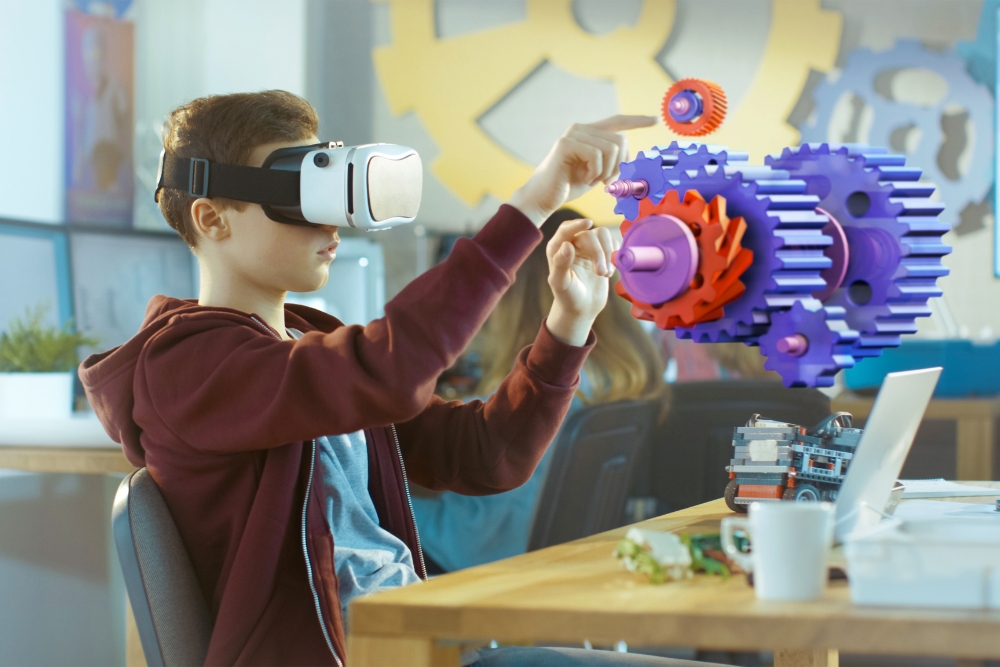
It opens up a world where we can simulate real-life situations for training, learning, or just experiencing things that might be challenging in the physical world. Assistive robotics, on the other hand, brings incredible support to our daily lives.
These robots help us perform tasks that could be difficult due to physical limitations.
We see these technologies as game-changers in disability services and barrier-free living. Imagine controlling devices around your home with simple voice commands or having a robot assist you with mobility without needing human assistance every time.
This is not just about making life easier but also about empowering everyone to live more independently and confidently. We aim to keep exploring these advancements in inclusive technology so that we all can go beyond barriers together, creating an environment of equal access for people with special needs and senior citizens alike.
Leveraging Technology for Disability Inclusion in the Workplace
Technology is transforming the workplace for people with disabilities. Companies are adapting to create an inclusive environment through technology, improving accessibility and accommodating diverse needs.
Benefits and challenges
Leveraging technology for disability inclusion in the workplace offers a myriad of benefits, yet it also presents several challenges. We’ve detailed these points in the table below to give you a clearer picture.
| Benefits | Challenges |
|---|---|
| Enhances accessibility for disabled employees. | High costs of implementation for small businesses. |
| Increases job opportunities for senior citizens and disabled people. | Requires ongoing training and support. |
| Improves productivity through customised tools. | May face resistance to change from existing employees. |
| Encourages a more inclusive workplace culture. | Ensuring privacy and security of assistive technology. |
| Facilitates remote work, offering flexibility. | Technical issues can disrupt work. |
By understanding these benefits and challenges, we can work together to create more inclusive and supportive work environments for everyone.
Innovations in Inclusive Technology
Innovations in inclusive technology include advanced screen readers, AI-powered captioning and translation, as well as assistive technology for mobility, vision, hearing, and daily living support. Inclusive design tools are also making a significant impact in fostering accessibility and inclusivity.
Advanced screen readers
Advanced screen readers use cutting-edge technology to provide a more comprehensive and accurate reading experience. These innovative tools can interpret complex webpage layouts, process dynamic content, and even describe images using advanced image recognition algorithms.
With AI integration, these screen readers can adapt to individual user preferences and navigate modern digital interfaces with ease.
These advancements in screen reader technology empower individuals with visual impairments to access information on the web more independently and efficiently than ever before. The continuous evolution of these tools plays a crucial role in breaking down barriers and creating an inclusive online environment for all users.
Inclusive design tools
Inclusive design tools enable us to create products, services, and environments that can be used by as many people as possible. These tools focus on diversity, equity, and inclusion in the design process, ensuring accessibility for individuals with disabilities.
By incorporating features such as adjustable text sizes, customisable colour contrasts, and voice commands into digital interfaces, inclusive design tools promote an environment where everyone can engage without barriers.
Developers are integrating inclusive design considerations from the outset of a project’s development to ensure that products and services are accessible to all users. This proactive approach not only benefits individuals with disabilities but also enhances usability for everyone.
AI-powered captioning and translation
Expanding on the topic of inclusive design tools, we can explore AI-powered captioning and translation – a revolutionary advancement in technology that benefits individuals with disabilities and senior citizens needing support in communication.
This technology leverages artificial intelligence to generate accurate captions for videos, making visual content accessible to those who are deaf or hard of hearing. Additionally, it provides real-time translation services, breaking down language barriers and promoting inclusivity for individuals with limited English proficiency.
AI-powered captioning and translation employ machine learning algorithms to accurately transcribe spoken words into text while also providing seamless translations across different languages.
Assistive technology for mobility, vision, hearing, and daily living
We have seen significant advancements in assistive technology, specifically tailored to enhance mobility, vision, hearing, and daily living for those with disabilities and senior citizens. This progressive support includes:
- Advanced wheelchairs and mobility scooters designed for enhanced manoeuvrability and comfort
- Smart glasses and visual aids that use augmented reality to improve vision and provide real-time assistance
- Hearing aids with noise-cancellation features and Bluetooth connectivity for seamless communication
- Adaptive devices for daily living such as smart home systems, voice-activated assistants, and customised utensils
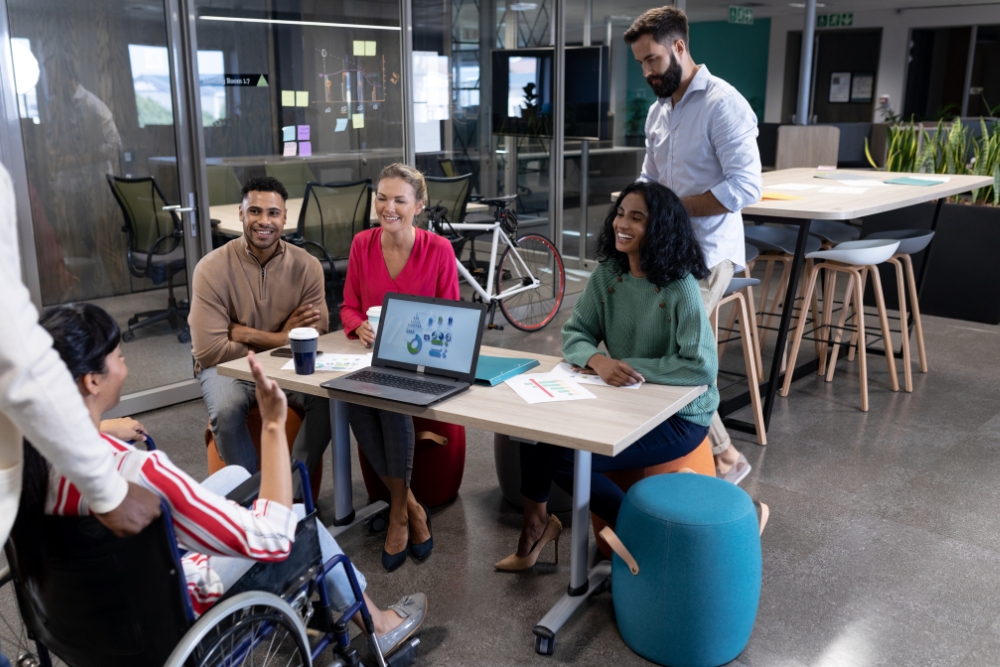
The Future of Assistive Technology and Promoting Inclusion
Addressing barriers and challenges, we’re paving the way for greater access to education and employment opportunities. Join us as we explore the exciting advancements in inclusive technology!
Addressing barriers and challenges
To overcome barriers and challenges when it comes to inclusive technology, we need better collaboration and cooperation between different agencies. Legislation and policy changes are also crucial for promoting access to education and employment opportunities for people with disabilities.
By maximising the use of technology, we can make a significant impact on modern society by ensuring equal access and opportunities for all.
Maximising access to education and employment opportunities is essential in addressing barriers faced by people with disabilities. The impact of technology in modern society could be transformative if we work together to break down these barriers through inclusive design, adaptive technology, and universal support systems.
Collaboration and interagency cooperation
To address barriers and challenges, different agencies and organisations need to work together. By collaborating across sectors, we can combine resources and expertise to create more comprehensive solutions that meet the diverse needs of people with disabilities.
Interagency cooperation enables us to streamline services, share best practices, and advocate for inclusive policies that benefit our community.
Moreover, collaboration fosters a network of support where disabled individuals are at the forefront of decision-making processes. This engagement empowers us to shape technology and services that truly reflect our lived experiences and preferences.
Legislation and policy changes
Legislation and policy changes have a significant impact on our daily lives as disabled individuals. These changes can improve accessibility, enhance workplace inclusion, and promote equal access to education and employment opportunities.
By advocating for inclusive policies at local, state, and national levels, we can push for greater support and resources that enable us to fully participate in society.
Incorporating universal design principles into legislation ensures that public spaces, transportation, and digital platforms are accessible to everyone. Additionally, promoting disability-inclusive hiring practices through policy initiatives encourages businesses to create supportive work environments.
Maximising access to education and employment opportunities
We can use technology to ensure that education and employment opportunities are accessible to all. Virtual classrooms, online learning platforms, and digital career resources provide flexibility for disabled individuals and senior citizens who may face physical barriers.
Additionally, assistive technologies like screen readers, captioning tools, and mobility aids can level the playing field in educational settings and workplaces. Employers should embrace inclusive design principles in their recruitment processes and workplace environments to create a welcoming space for everyone.
By integrating these advancements into educational institutions and professional spaces, we promote equal access to learning opportunities and careers. This not only empowers individuals but also enriches our society by harnessing the unique talents of diverse individuals.
The impact of technology in modern society
Technology has made significant strides in modern society, offering a wide range of tools and solutions that have revolutionised the way we live, work, and interact with the world around us.
These advancements have had a profound impact on disabled individuals and senior citizens, providing greater access to information, communication, education, and employment opportunities.
With the advent of inclusive technology such as advanced screen readers, AI-powered captioning and translation services, and assistive robotics for daily living tasks, barriers are being broken down to foster greater independence and inclusion.
This shift is not only enhancing the quality of life for people with disabilities but also promoting an environment where everyone can actively participate in society.
As technology continues to evolve rapidly, disabled individuals and senior citizens need to stay informed about the latest innovations that can further empower them in their daily lives.
By keeping abreast of these technological advancements such as virtual reality applications for therapy or mobility aids equipped with smart sensors for improved navigation, individuals can seize new opportunities for personal growth and enhanced wellbeing.
Go Beyond the Barriers in Disability Services
In the fast-paced world of technology, invigorating developments are shaping the future of disability services. New advancements in virtual reality and assistive robotics open up a realm of possibilities for inclusive experiences.
Leveraging technology breaks down barriers for disabled individuals entering the workforce, promising a brighter future in education and employment opportunities. Join us as we look ahead, collaboration, policy changes, and a focus on maximising access will continue to push boundaries towards greater inclusion and impact modern society profoundly.